
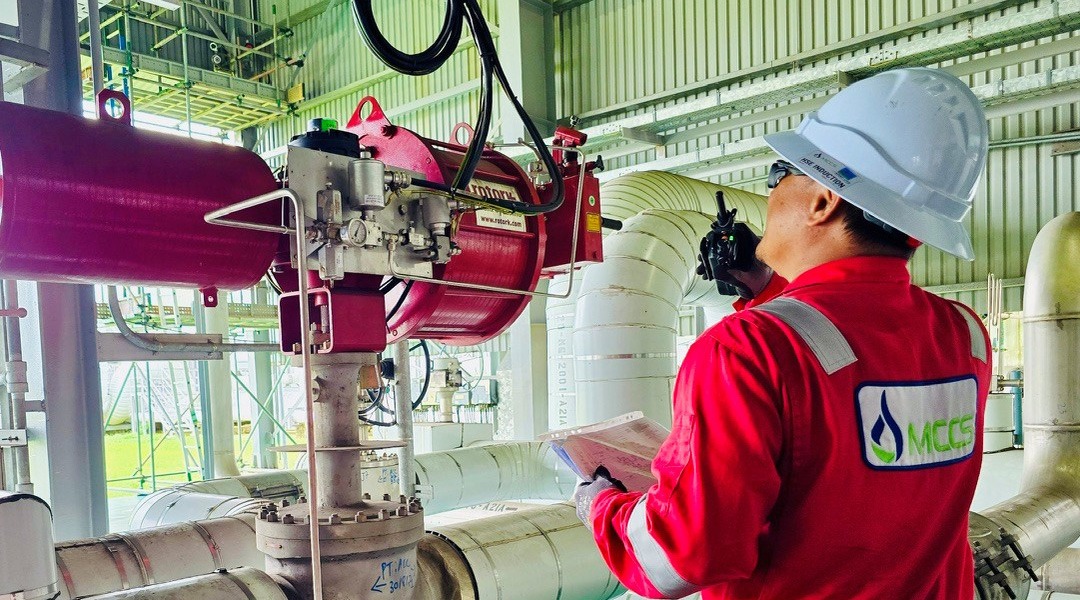
Why Success is Won or Lost at Mechanical Completion
It is a scenario all too familiar in large-scale industrial projects. A massive capital expenditure project, months or even years in the making, is winding down. The structural steel is set, miles of piping are hung, and the construction phase is nearing the finish line.
But as the transition to startup begins, the cracks start to show. A critical valve is installed backwards. An electrical loop fails to communicate with the control room. A single missing gasket stalls a pressure test. Suddenly, a highly paid plant commissioning crew is sitting idle, and the project timeline begins to slip.
In heavy industry, the bridge between construction and commercial operation is notoriously fragile. Transforming a static pile of equipment into a live, fully operational facility is highly complex; it is never as simple as just flipping a switch.
A successful startup requires a meticulous, phased testing process. At MCCS, we specialise in bridging this gap, deploying our expert onshore and offshore services to ensure your project transitions from construction to operation safely, on time, and within budget.
Aligning the Milestones: Definitions That Matter
Project delays often stem from a simple misunderstanding: project teams, stakeholders, and contractors aren’t speaking the same language. The lines between pre-commissioning, mechanical completion, and commissioning frequently blur.
To ensure absolute clarity, MCCS establishes and enforces rigorous milestones across the project lifecycle:
1. Mechanical Completion (MC) – The “Static” Phase
This is the milestone where all physical construction and installation work is complete and verified against design drawings (such as P&IDs).
MCCS Expert Focus: We oversee and verify visual inspections, Non-Destructive Testing (NDT), hydrostatic piping tests, and equipment alignment. At this stage, the system is fully built but remains “static” and unenergized.
2. Pre-Commissioning – The “Cold Testing” Phase
This phase bridges the gap between dead metal and a live plant. Systems are energised, but without introducing hazardous or process fluids.
MCCS Expert Focus: Our teams manage electrical loop checks, instrument calibration, chemical cleaning, pipe flushing, and uncoupled motor runs to ensure the infrastructure is functional.
3. Commissioning – The “Dynamic Testing” Phase
The final frontier before commercial startup. Process fluids and live energy are introduced to the systems to prove the facility operates according to the original design intent and performance guarantees.
MCCS Expert Focus: We guide the safe, controlled introduction of live mediums, mitigating risks while validating system performance.
Ensuring Success Through Systemisation
The primary reason major projects stumble during the transition phase is a fundamental misalignment of objectives: builders build by area, but testers test by system.
During construction, it makes logistical sense for teams to work geographically (by area). However, commissioning cannot occur by area; a facility is brought to life by functional systems (e.g., the instrument air system or the cooling water system).
To eliminate this conflict, MCCS introduces a systemised approach early in the project lifecycle. We work with project managers to reverse-engineer the construction schedule based on the required commissioning sequence. By forcing a shift from area-based building to system-based completion, we ensure construction teams prioritise the exact systems the commissioning teams need next.
MCCS Framework for a Smooth, Safe Transition
To eliminate human error, lost paperwork, and costly delays, MCCS implements strict preparation protocols well before construction finishes.
Puma Plus
Relying on outdated spreadsheets to track tens of thousands of components is a recipe for project failure. MCCS utilises an advanced digital Completion Management System (CMS) to track inspection and test records, monitor real-time progress, and streamline system handovers. This provides complete visibility and transparency for stakeholders.
Rigorous Punch List Management
When inspectors walk the site, outstanding items are captured on a “Punch List.” How these items are categorised dictates the project schedule. MCCS enforces a strict, binary classification system:
- Category A (Critical): Items that prevent safe pre-commissioning or commissioning. These must be cleared prior to handover.
- Category B (Non-Critical): Minor items (e.g., touch-up paint, missing labels) that do not impact safety or functionality. These can be safely deferred to post-handover.
Our Commitment: The ultimate goal of the MCCS mechanical completion phase is to drive Category A punch items to absolute zero before handover, eliminating safety risks and operational downtime.
Early Team Integration
MCCS believes in breaking down silos early. We integrate lead commissioning engineers and construction teams during the engineering design and early construction phases. By reviewing 3D models and conducting early site walkdowns, our experts spot operability and maintenance issues—such as a valve that requires scaffolding to reach, while it is still cheap and easy to fix.
Managing the Handover Process
The culmination of Mechanical Completion is the formal transfer of ownership from the construction team to the commissioning team. MCCS manages this delicate handover through joint walkdowns, where representatives from both parties walk the physical lines together to verify compliance.
Once verified, the Mechanical Completion Certificate (MCC) is signed, ownership is officially transferred, and the commissioning team can safely begin bringing the plant to life.
In Summary
The transition from construction to commissioning is the most critical juncture of any major industrial project. You cannot afford to wait until the builders are finished to start planning how to turn the facility on.
By partnering with MCCS, you infuse your project with a systemised approach, rigorous punch list management, advanced digital tracking, and early expert integration. We transform Mechanical Completion from a chaotic construction milestone into a smooth, safe, and highly effective strategy for commercial success.
Contact MCCS today to learn how our expert services can safeguard your next project deployment.
MCCS has had the privilege of serving a diverse portfolio of international clients













What does commissioning mean in oil and gas?
Commissioning in oil and gas refers to the systematic process of inspecting, testing, and verifying that all equipment, systems, and processes are installed, functioning correctly, and ready for safe and efficient operation before production begins.
Why is commissioning in oil and gas important?
Commissioning in oil and gas is important because it ensures that all equipment, systems, and processes are tested, safe, and fully operational before production begins, reducing risks, preventing costly failures, ensuring regulatory compliance, and optimising efficiency.
What is the benefit of mitigating potential problems during commissioning?
Mitigating potential problems during commissioning ensures a smoother, safer, and more efficient start to operations by preventing costly delays, ensuring safety, optimising performance, reducing risks, and enhancing regulatory compliance.