Services
BreechLock Heat Exchanger Services
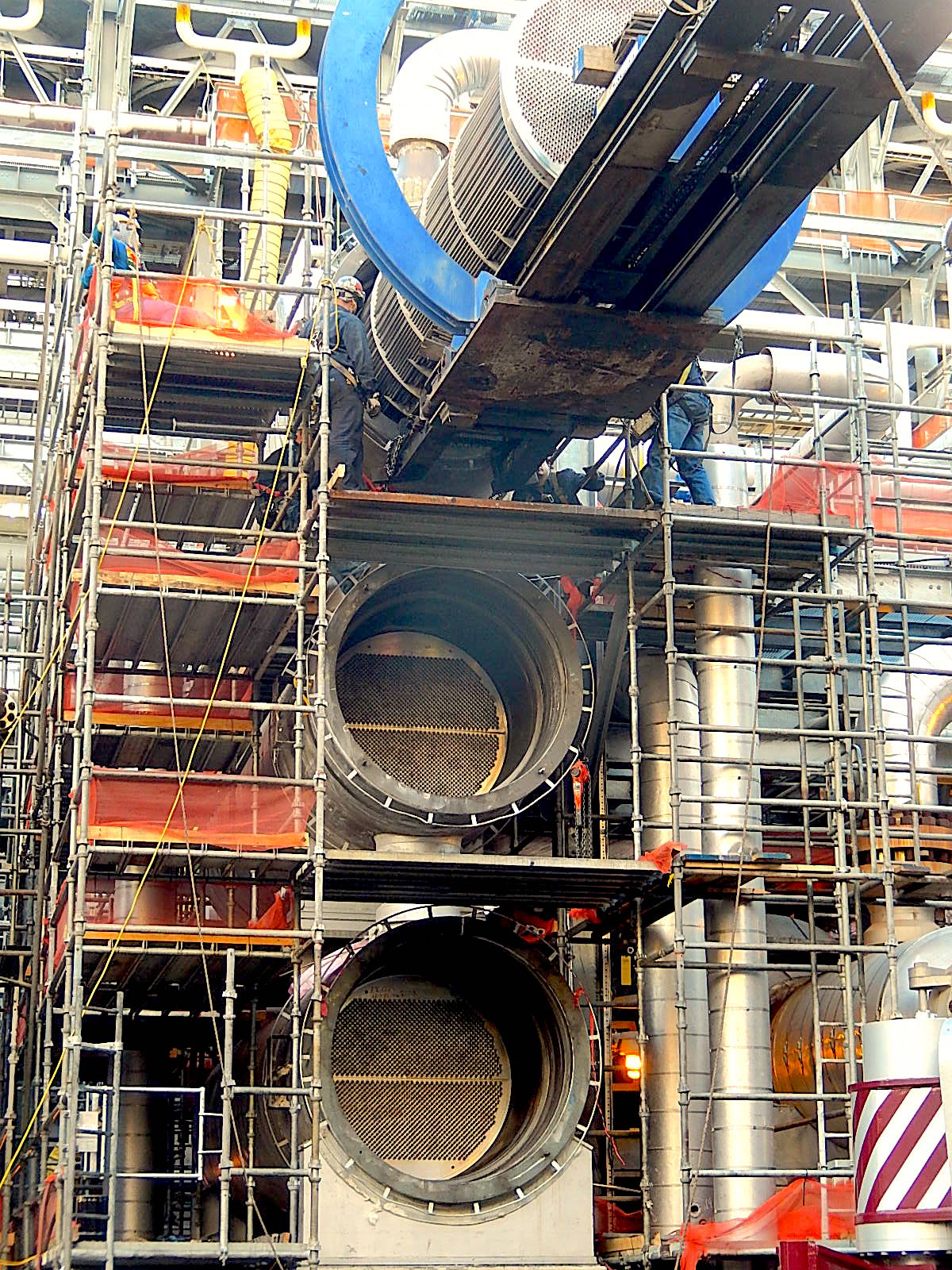
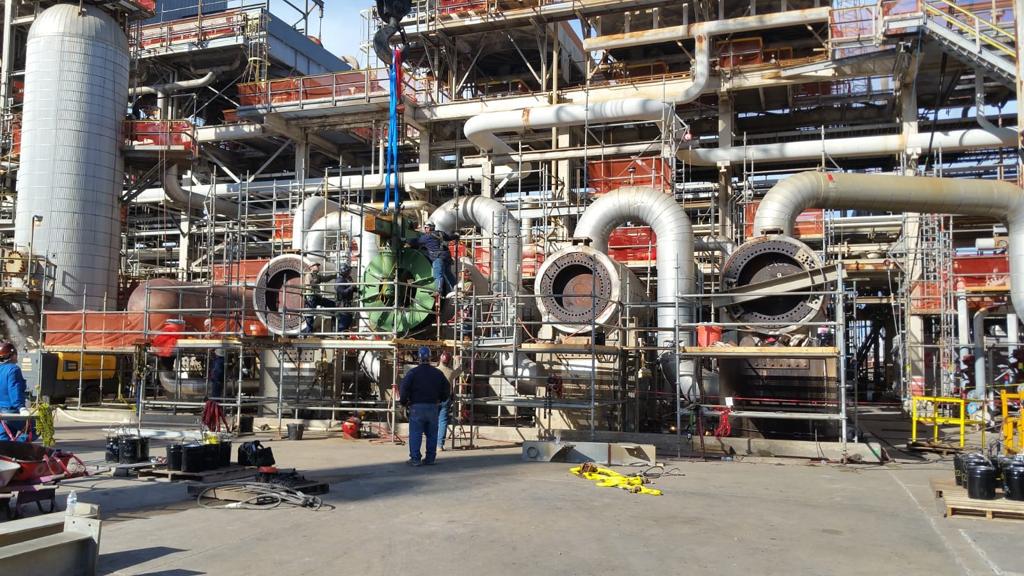
MCCS International, in partnership with Sealing and Bolting Technologies LLC, provides specialised breech-lock exchanger services to worldwide oil, gas, and petrochemical plants. With over 250 installations across five countries, our team has a proven track record of installation, maintenance, commissioning, and operational optimisation of breech-lock exchangers.
Our approach ensures leak-free performance, operational reliability, and extended equipment lifespan, while complying with international safety and engineering standards for onshore and offshore platform maintenance.
BreechLock Exchanger Services & Procedures
Proper planning is essential for breech-lock heat exchanger servicing. Click on one of the following drop downs for more information on the service MCCS engineers provide.
Pre-Installation Engineering & Planning
- Detailed review of design documents and manufacturer specifications
- Analysis of flange, gasket, and bolting requirements
- Joint integrity planning, including bolt load calculations
- Risk assessment and development of safe work procedures for handling and lifting
- Pre-installation orientation and training for client or operational teams
This preparation ensures that each breech-lock heat exchanger will be installed with the right alignment and torque, which supports safe and reliable operation.
Installation Engineering & Planning
Our teams manage the complete installation process, with detailed records of torque and bolt load for full traceability and certification.
- Mechanical fit-up of breech-lock components
- Precision alignment of shell, tubes, and covers
- Controlled assembly using calibrated torque and tensioning tools
- Verification of bolt patterns, gasket seating, and compression
- Hot/thermal alignment checks to account for operational expansion
Sealing Technology
To ensure your heat exchanger maintenance maintains a leak-free performance, our services include:
- Selection of suitable gasket materials based on process media, temperature, and pressure
- Verification of flange surface finish and preparation of sealing faces
- Controlled gasket compression using calibrated torque or hydraulic tensioning
- Identification and mitigation of common sealing challenges (e.g., creep, relaxation, misalignment)
This ensures joint integrity is maintained during startups, shutdowns, and operational variations.
Bolting & Joint Integrity Technology
MCCS applies the following advanced bolting methods to secure heat exchangers. We do this to maintain joint integrity and extend equipment service life.
- Hydraulic bolt tensioning for critical and high-load connections
- Torque control using calibrated torque wrenches
- Proper bolt sequencing and pattern application for uniform load distribution
- Verification of bolt elongation and flange gaps
- Inspection for signs of stress, fatigue, or loosening
This can reduce the risk of leaks or unplanned shutdowns from joint integrity failure.
Heat Exchanger Maintenance & Troubleshooting
Comprehensive heat exchanger maintenance helps minimise downtime and support the safe, long-term operation of onshore and offshore platforms. MCCS can provide:
- Routine inspection, bolt retorquing, and joint integrity checks
- Gasket replacement and verification of sealing surfaces
- Mechanical cleaning and chemical flushing of tubes
- Leak investigation, diagnosis, and rectification
- Predictive maintenance advice to improve future reliability
Commissioning & Functional Testing
Following installation or maintenance, MCCS performs full system commissioning to verify heat exchanger readiness and operational integrity. The following steps ensure your breech-lock exchanger meets design specifications and is ready for operation:
- Pressure testing, hydrotesting, and leak detection
- Temperature and operational ramp-up validation
- System alignment verification under load
- Performance checks to confirm heat transfer efficiency and operational stability
Training & Consulting
As part of our international onshore and offshore services, MCCS can empower your teams with the training they need to operate and maintain equipment effectively.
Contact us if you require any of the following services:
- On-site training in sealing and bolting practices
- Instruction on correct assembly, disassembly, and inspection procedures
- Consulting for exchanger selection, design improvements, and operational best practices
- Guidance on ASME-based methodologies (referencing PVP2012-78702 and PVP2014-28174)
e.
MCCS has had the privilege of serving a diverse portfolio of international clients